Rediscovery of Pyramid
Exhibition Background
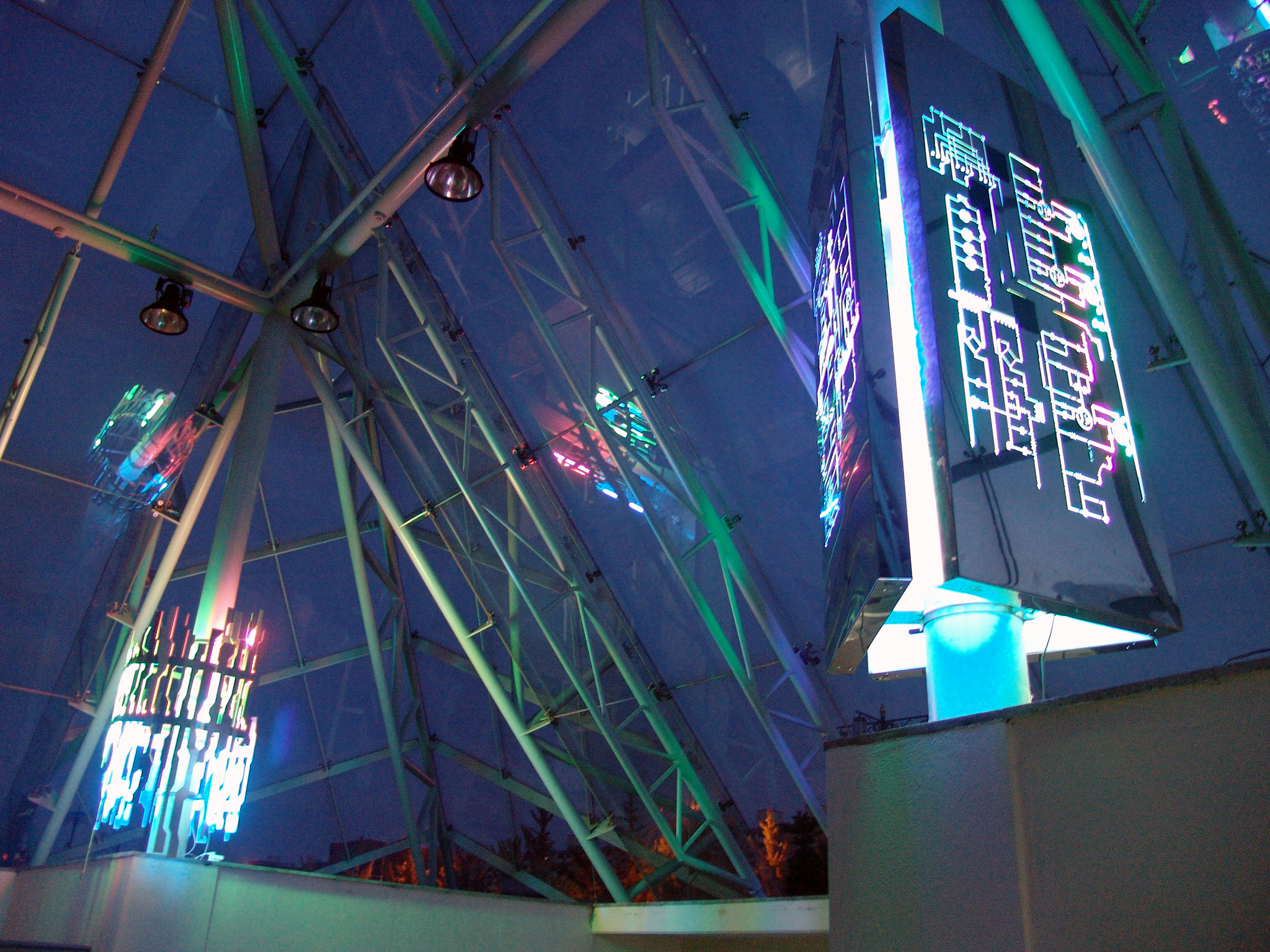
Rediscovery of Pyramid was presented at Gyeonggi Culture Hall in Suwon from July 15, 2005 to July 14, 2006. Co-hosted by the National Museum of Modern and Contemporary Art, Korea and Gyeonggi Culture Hall and organized by the Korean Fine Arts Association, the exhibition reframed the glass pyramid at the front of the venue not as a mere architectural object, but as an exhibition space where time, sensation, memory, and technology intersect.
The pyramid has long symbolized royal authority and eternity, especially in the context of ancient Egypt. At the Louvre, the glass pyramid also serves as a passage that guides present-day visitors toward the past. This exhibition layered those historical meanings onto the glass pyramid in Suwon. The large central pyramid and the two smaller pyramids on either side created a balanced structure that connected past, present, and future. The two columns of the glass pyramid on which Jaeeon Byun’s works were installed acted as axes where that flow condensed, filling the space with a sense of waves, movement, and radiating energy.
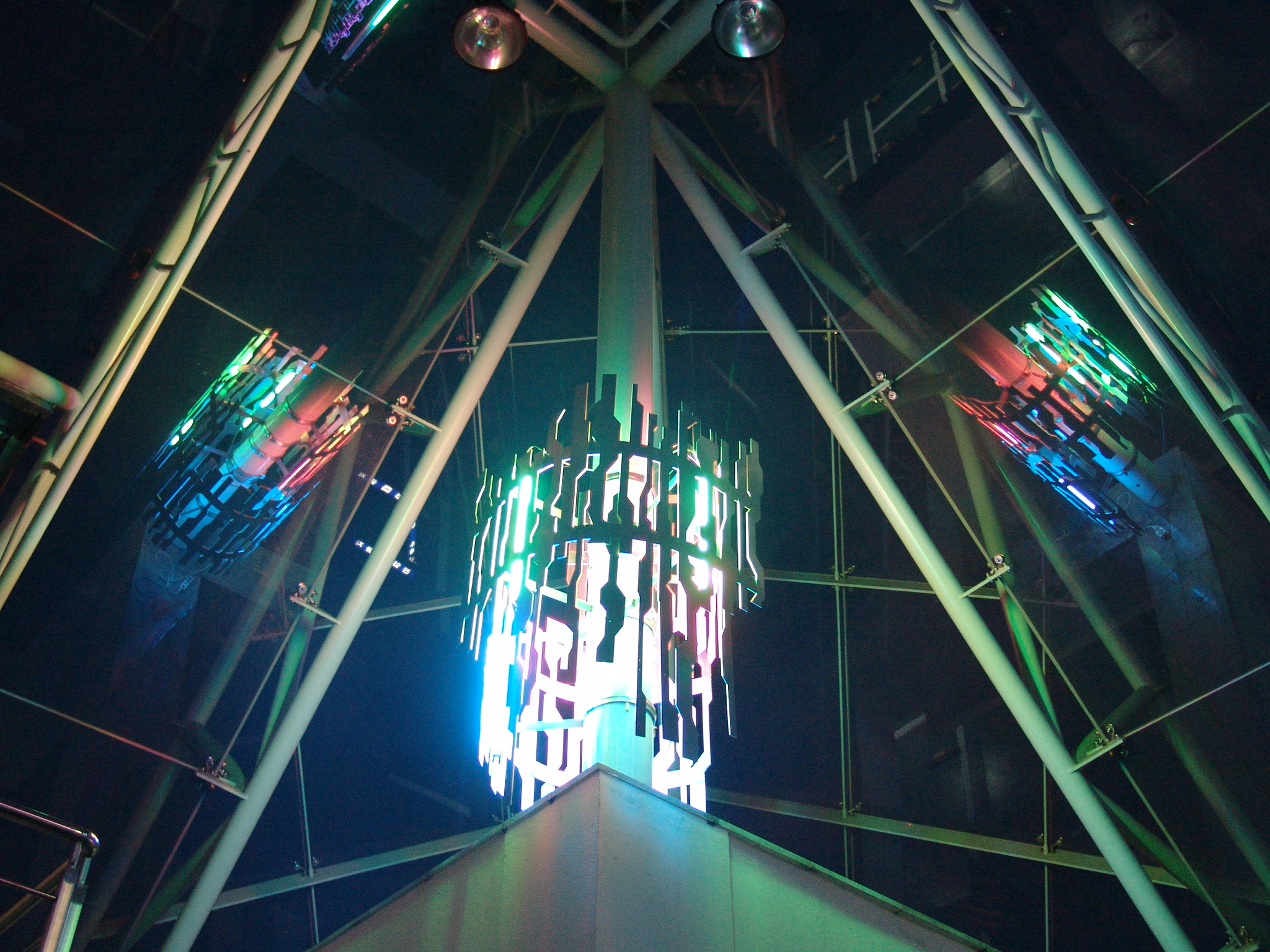
Jaeeon Byun’s Boundaries of Digital and Analog installed on one of the glass pyramid columns
Artwork: Boundaries of Digital and Analog
The Boundaries of Digital and Analog works installed in this exhibition were variable installations composed of hologram, LED lighting, neon, stainless steel, and aluminum. Emitting red, green, and blue wavelengths of light, the structure evokes an immaterial form animated by electrical energy. In doing so, it translates the circuitry that underpins digital culture into a sensory language of space.
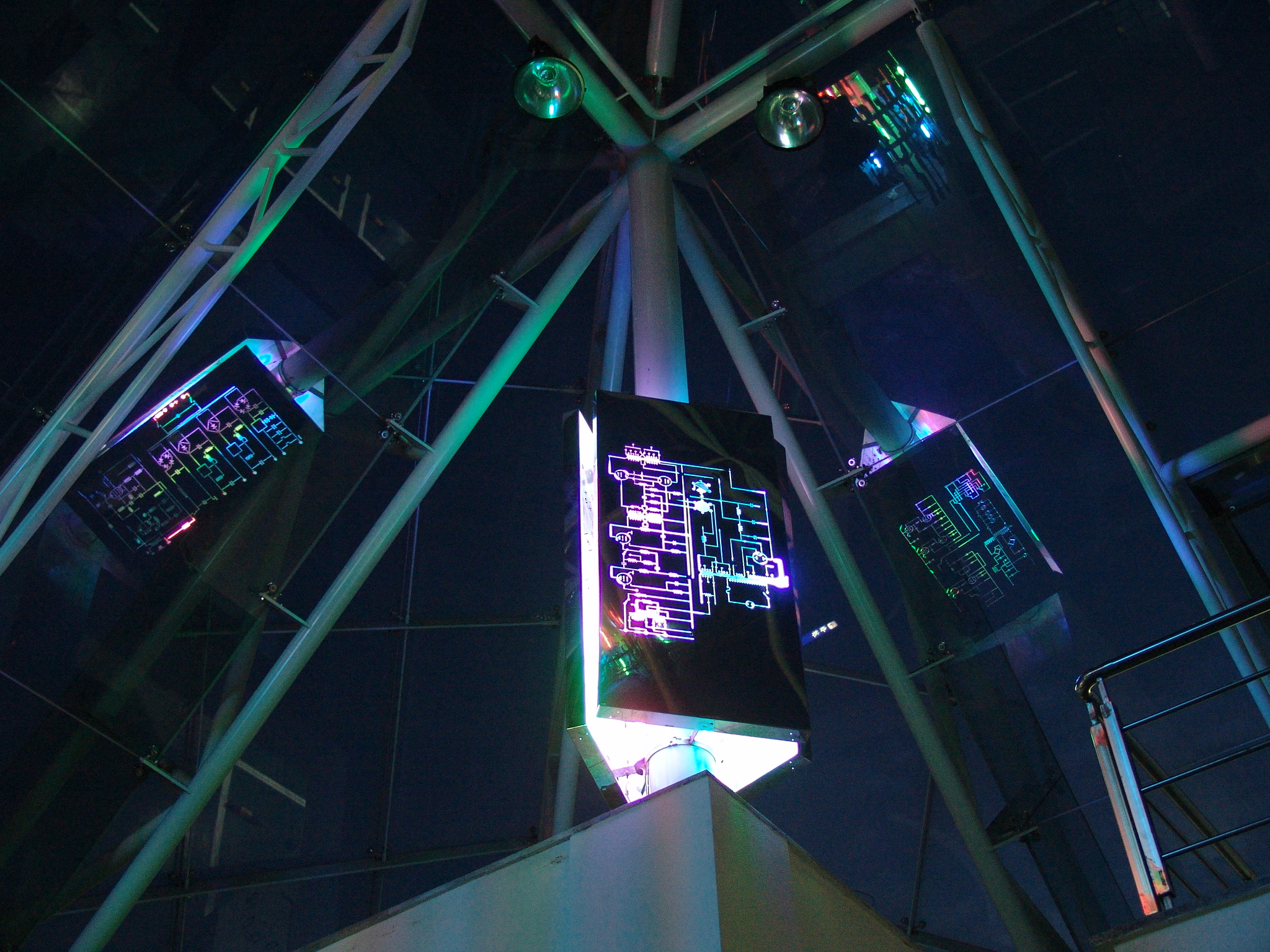
Detail of light waves and circuit-like layers meeting the glass pyramid structure
Here, the transparent glass pyramid functions not as a passive backdrop but as an exhibition medium. It brings city and nature, interior and exterior, and material and immaterial conditions into relation within a single space. As the work responds to its setting, the semiconductor-like layers and light reveal shifting depths, widths, and volumes, opening onto a field that seems to expand without limit. Time and movement are presented not as fixed forms but as a spatial paradigm that changes and evolves.
Jaeeon Byun links the circuit structures hidden inside the media that constitute digital society to an analog formal language rooted in the plastic arts. He extends waves of light that come to life through electrical signals across the entire exhibition space. As a result, the work draws the senses and state of mind of people living in a fast-paced contemporary world into the exhibition space. At the same time, it shows that art is not a realm separate from technology, but a medium that can breathe with pure human sensibility. In Rediscovery of Pyramid, his works become a spatial message about how people coexist and perceive within digital culture, moving beyond the architectural structure of the glass pyramid.
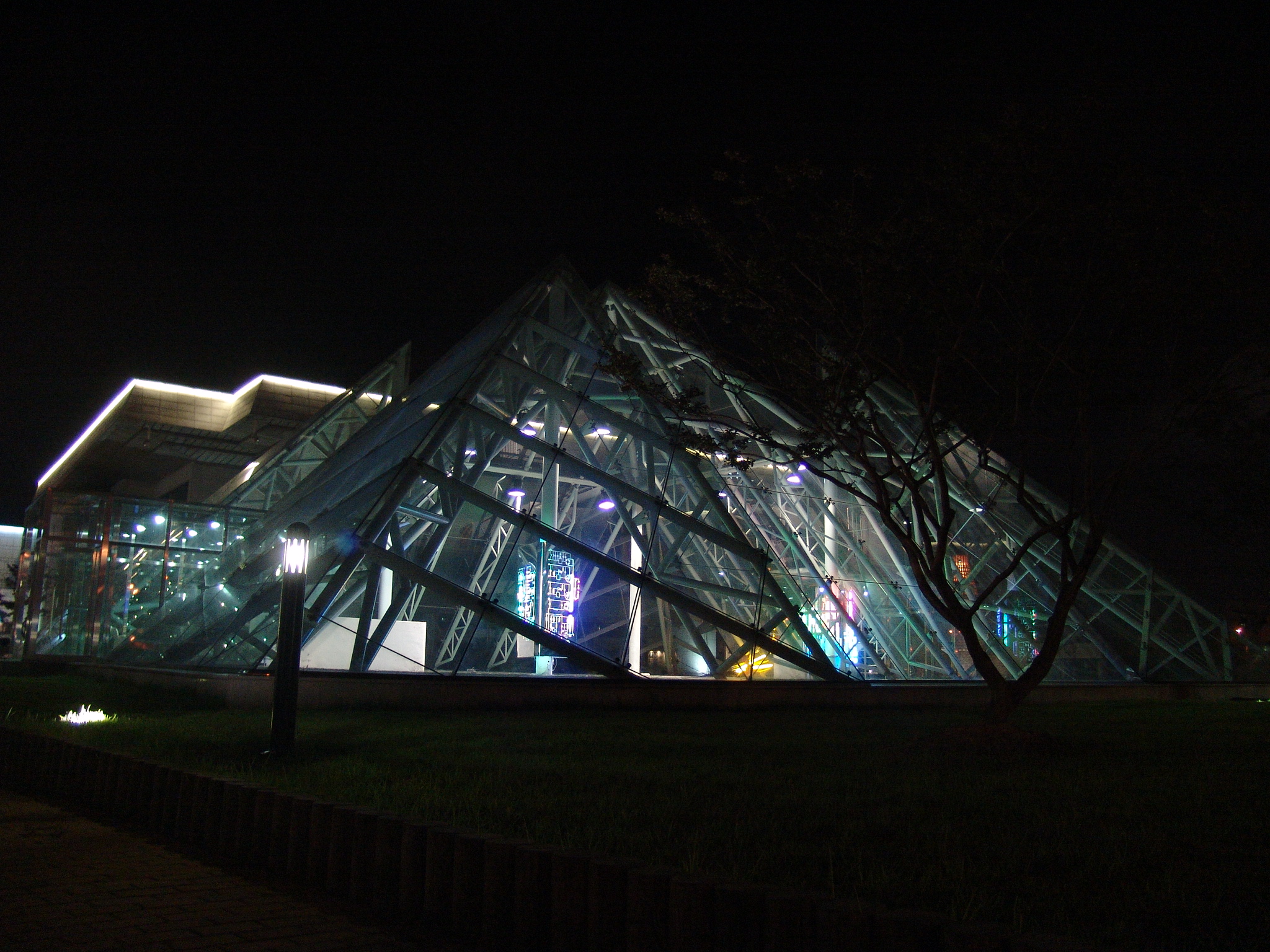
Exterior view of the glass pyramid and installation at Gyeonggi Culture Hall