King Sejong and Music: Yeo Min Rak, Poetry for Peace and Coexistence
Exhibition Background
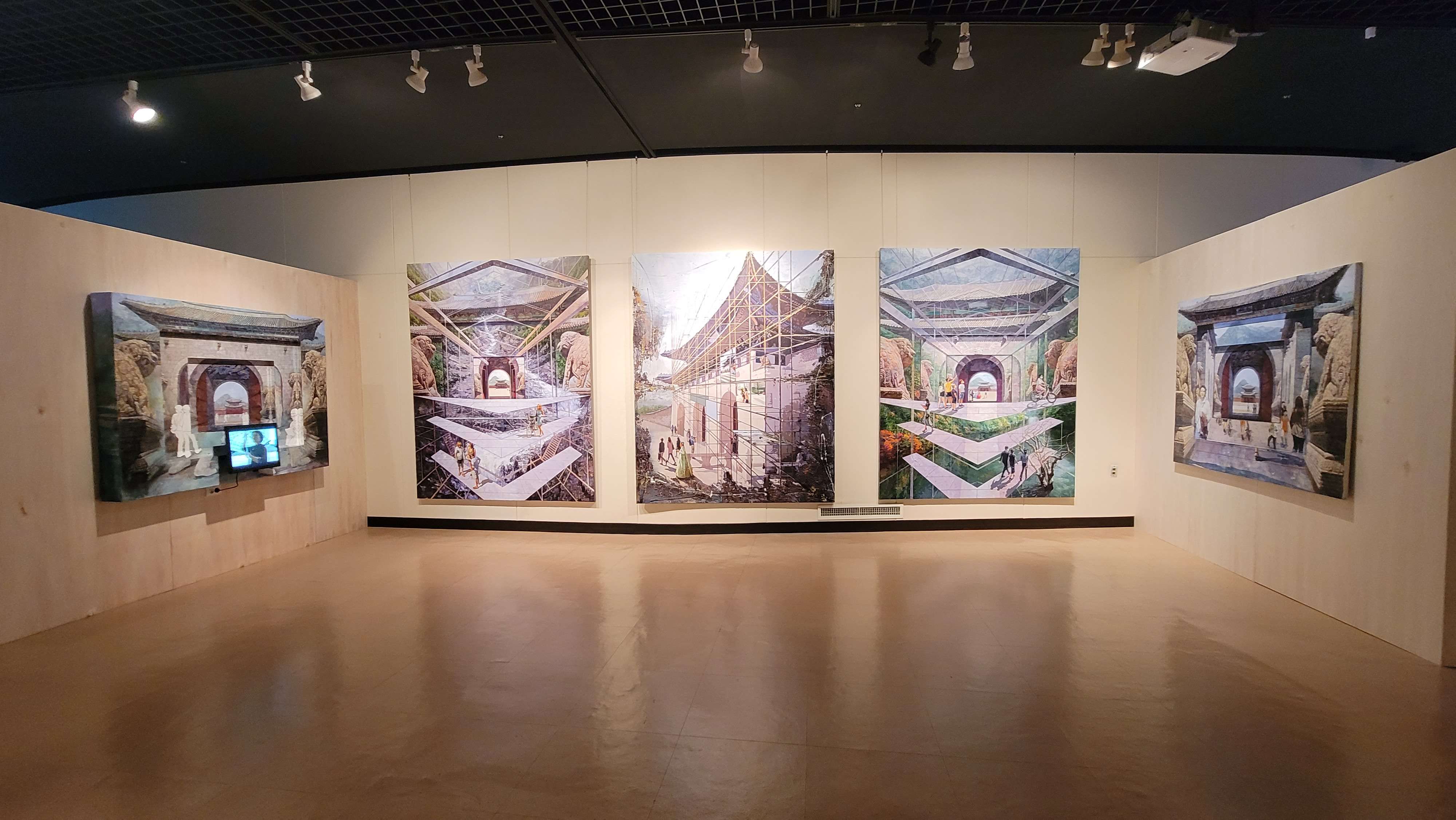
King Sejong, the fourth monarch of the Joseon Dynasty (1392–1897), is renowned as a ruler who listened to his people and created Hunminjeongeum—the Korean alphabet—to communicate with them. The King Sejong and Music: Yeo Min Rak, Poetry for Peace and Coexistence exhibition was held at the Sejong Cultural & Arts Center from September 3 to October 9, 2021. This exhibition explored King Sejong and the theme of music, specifically “Yeo Min Rak” (“Enjoyment with the People”), reinterpreting its message of peace and coexistence. The exhibition aimed to convey a spirit of unity and collective well-being, resonating beyond the challenges of the COVID-19 pandemic.
Artwork Description
Geunjeongjeon and Gwanghwamun were where King Sejong held his coronation, symbolic places for establishing laws and norms for the new nation and realizing politics for the people. They were also stages where he sought to become one with the people through music.
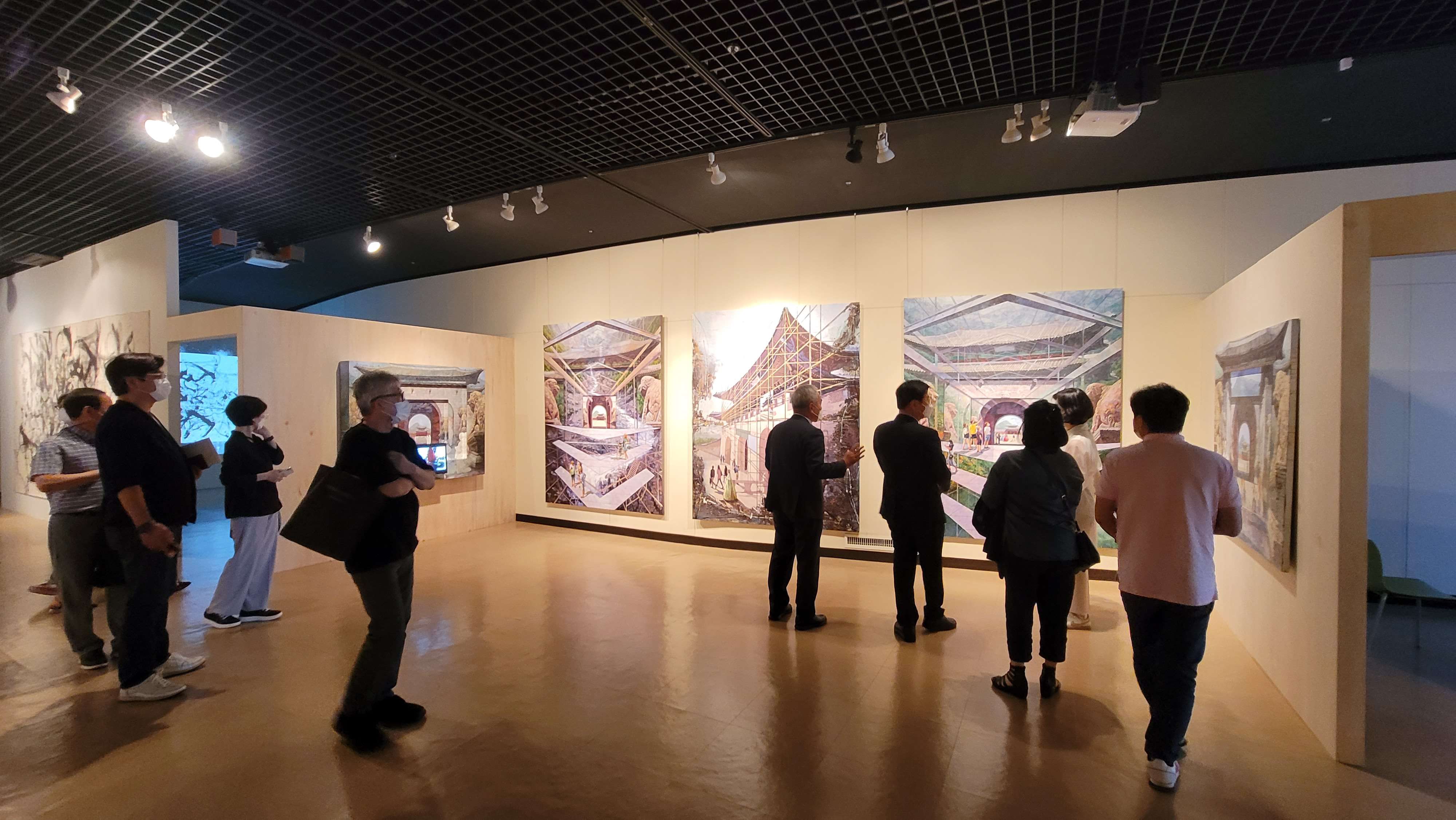
“Yeo Min Rak” carries strong symbolism for righteous governance. Just as King Sejong pursued the ideal world he dreamed of with the people through music, the exhibition’s “Gwanghwamun Series” interprets the historical meaning of Gwanghwamun—where past and present intersect—through a contemporary art lens.
The exhibition King Sejong and Music: Yeo Min Rak – Poetry for Peace and Coexistence sought to draw deep reflection on Korean cultural identity through the gaze of one of its most beloved historical figures. In particular, “Yeo Min Rak – Space for Reflection” invites us to imagine an ideal symbiosis between humans and nature.
This exhibition invites audiences to think together about how historical heritage influences modern Korean identity. Guiyoung Lee presents a unique aesthetic that blends abstract expressionism with layered spatial expression and Korea’s deep cultural references, and each canvas functions as a meditative space where viewers face both historical narrative and personal reflection.